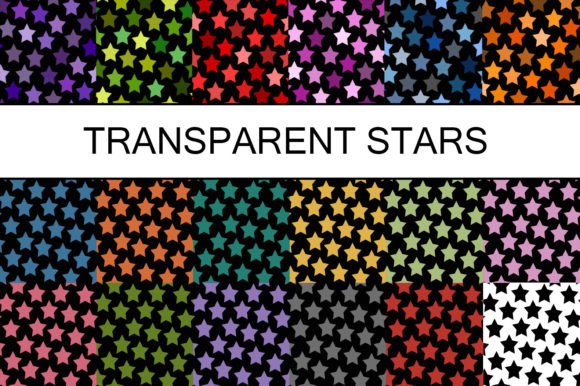
Transparent Stars Seamless Pattern: Real Ways to Use It in Design, Branding, and Everyday Creativity
A transparent stars seamless pattern is exactly what it sounds like — a repeating grid of stars where the star shapes themselves are see-through, leaving the background to do the heavy lifting. Instead of a solid, opaque star sitting on top of a texture, the pattern uses transparency so the stars reveal whatever is underneath. That could be a photo, a gradient, a solid color, or even another pattern. Because the stars are cut out rather than stamped on, the result feels light, airy, and often more sophisticated than a typical starry print.
You don’t need to be a graphic designer to appreciate how this kind of pattern works in real life. It shows up everywhere, from wedding invitations to product packaging, website backgrounds to fabric prints. What makes it especially useful is how little it demands attention. It’s there, but it doesn’t shout. That’s a rare quality in a pattern that features stars, which can easily lean into childish or overly festive territory.
Giving Digital Interfaces a Soft, Atmospheric Edge
If you work with websites, apps, or any on-screen content, you know how tricky it can be to add visual texture without slowing things down or cluttering the layout. A transparent stars seamless pattern works beautifully as a subtle background overlay. Set it as a repeating layer on top of a hero image or a full-screen gradient, and you instantly get a sense of depth — like looking up at a night sky through a window.
One practical example is a lifestyle blog or a small e-commerce site that sells handmade goods. Instead of a plain white or pastel background, the site can use a faint transparent stars pattern over a soft cream color. The stars add a hint of whimsy without distracting from product photos or text. For a wellness app, the same pattern over a muted lavender gradient can evoke calm and a bit of wonder. The key is to keep the opacity low and the scale small enough that the stars feel like texture, not decoration.
What to watch for: On screens, a transparent stars pattern can cause readability issues if placed behind text. Always test contrast — especially on mobile where the pattern repeats more densely. Also, SVG or PNG formats with transparency work best so the pattern loads cleanly at any resolution.
Branding and Packaging That Feels Unobtrusive Yet Memorable
Small businesses and independent creators often struggle to make their packaging stand out without resorting to loud logos or heavy print. A transparent stars seamless pattern applied to a box, bag, or label gives you a quiet signature. It says “thoughtful” without shouting “look at me.”
Imagine a boutique soap brand. Their boxes are plain kraft paper with a white label. By printing a transparent stars pattern directly onto the kraft paper — or using a clear sticker with the stars cut out — the packaging suddenly feels more intentional. The stars catch the light differently depending on the angle. Customers notice it, even if they can’t quite articulate why it looks good. That’s exactly the kind of brand impression that leads to repeat purchases.
For event invitations — weddings, baby showers, milestone birthdays — a transparent stars pattern can be the central design element. Letterpress print the stars as a transparent foil over a dark navy cardstock, and you get a night sky effect that costs less than full-bleed printing. Or use it as an envelope liner that peeks out when the recipient opens the mail. Practical, budget-friendly, and memorable.
Mix and Match with Other Patterns
One underrated strength of a transparent stars pattern is how well it layers with other prints. A floral or geometric pattern underneath becomes partly visible through the stars, creating a layered look that’s popular in stationery and textile design. If you’re designing fabric for throw pillows or curtains, using a transparent stars pattern as a top layer over a smaller polka dot or stripe gives you two textures in one printing pass. That saves money and opens up creative combinations.
DIY and Crafting: From Digital Cut Files to Heat Transfers
For the crafter or hobbyist, a transparent stars seamless pattern is a versatile asset. If you own a cutting machine like a Cricut or Silhouette, you can import the pattern as a cut file and use it to create vinyl decals where the stars are actually holes in the vinyl. Stick that on a window, a mirror, or a laptop lid, and the surface itself shows through. The same trick works for stencils — spray paint or fabric ink through the star cutouts for a distressed, handcrafted look.
Real example: Someone making personalized notebooks as gifts can print a transparent stars pattern on the cover using a home inkjet or laser printer. Then they can write the recipient’s name in metallic marker over the stars. Because the pattern is seamless, it wraps around the spine without awkward gaps. That level of polish used to require professional printing, but now it’s accessible with a decent printer and the right PDF.
Sublimation enthusiasts, too, can use transparent stars patterns as overlays on tumblers, shirts, or coasters. The stars allow the base color or image to show through, which means you can layer a pattern over a gradient or photo without blocking it entirely. The result looks custom and high-end, even if you’re working at home with a heat press.
Things to Consider Before Applying a Transparent Stars Seamless Pattern
As helpful as this pattern can be, it’s not a one-size-fits-all solution. Here are a few practical factors to weigh before you commit to it in any project.
- Background complexity: The pattern relies on the background for its visual effect. If the background is too busy — say, a detailed photograph — the stars might blend in or disappear entirely. It works best on solid colors, gradients, or subtle textures.
- Scale and spacing: A pattern with large, widely spaced stars feels elegant and airy. Dense, tiny stars can look like noise or dust on the screen or print. Test different scales — most pattern resources let you adjust the repeat size.
- File format matters: For digital use, SVG or transparent PNG are ideal. For print, a high-resolution TIFF with an alpha channel preserves the transparency cleanly. Avoid JPEG because it can’t handle true transparency and will leave a white or black block.
- Color compatibility: Because the stars are transparent, the color underneath is what you see “in” the stars. If you want the stars to appear as a specific color, you’ll need to place a solid shape behind the pattern that provides that color. That’s an extra step, but it gives you total control.
- Purpose balance: A transparent stars pattern is subtle by nature. If you need a bold, high-impact design, this isn’t it. It’s a supporting actor, not the star of the show — pun intended. Use it where you want texture, not a statement.
Where to Find or Create Your Own Pattern
You don’t have to design a transparent stars seamless pattern from scratch unless you want to. Many stock image sites offer them as vector files or high-res raster images. Look for terms like “transparent star overlay,” “seamless star cutout,” or “starry sky pattern transparent.” If you prefer to build your own, design software like Adobe Illustrator, Affinity Designer, or even free tools like Inkscape can create a seamless pattern in a few steps: draw a star, duplicate it, arrange it in a grid, and export with a transparent background. Set the star fill to “none” and give it a stroke if you want an outline effect.
For those using Canva or similar online tools, you can upload a transparent PNG pattern and layer it over any background element. The result is instant and requires no technical skill. That makes this pattern accessible to anyone planning a digital scrapbook, a social media graphic, or a simple flyer.
Strengths That Keep This Pattern Relevant
The biggest strength of a transparent stars seamless pattern is its adaptability. It works equally well on paper, fabric, screen, and vinyl. It can be elegant or playful depending on the scale and background. It prints well on most home printers because there’s no heavy ink coverage — only the edges of the stars might have fine lines. That saves ink and reduces bleeding. It also scales beautifully: shrink it down and it becomes a micro-texture; blow it up and it becomes a dramatic overlay.
Another strength is that it rarely feels dated. Stars are timeless, and transparency keeps the pattern from feeling like a specific trend. Whether you’re designing for a 2025 brand refresh or a classic stationery line, a transparent stars pattern won’t look out of place next year.
Potential Limitations You Should Know
On the flip side, the pattern can be frustrating if you need high contrast. Because the stars are transparent, they don’t have a color of their own. On a light background, they may be nearly invisible. On a busy background, they can get lost. You might find yourself adding an extra outline or a faint shadow around each star to make them pop. That adds complexity and can ruin the seamless repeat if not done carefully.
Also, printing transparency reliably depends on the printer and the medium. Some home inkjets handle transparent areas poorly, leaving faint white fringes. If you’re printing for a client or selling products, always run a test print first. Professional print shops handle transparency well, but it’s worth asking about their RIP software and how it interprets transparent layers in PDFs.
Finally, be mindful of the emotional tone. Stars can trigger associations with childhood, fantasy, or celebration. That’s fine if it matches your intent. But if you’re aiming for corporate minimalism or high-tech seriousness, a star pattern — even a transparent one — might send the wrong signal. Context is everything.
In short, a transparent stars seamless pattern gives you a quiet, effective way to add atmosphere to nearly any visual project. It’s not flashy, and that’s exactly why it works. Whether you’re building a brand, crafting gifts, or refreshing a website, those subtle little stars can make all the difference — without anyone even realizing they’re there.